-ED endings
-ED explanation
We use 3 pronunciations for -ED endings—-T, -D, and -ID—depending on the last sound of the verb.
We use 3 different pronunciations for -ED endings.
Sound -t = walked – walkt
Sound -d = cleaned – cleand
Sound -id = needed – need-id
The pronunciation depends on the last consonant of the verb.
Look at the image and repeat after me.
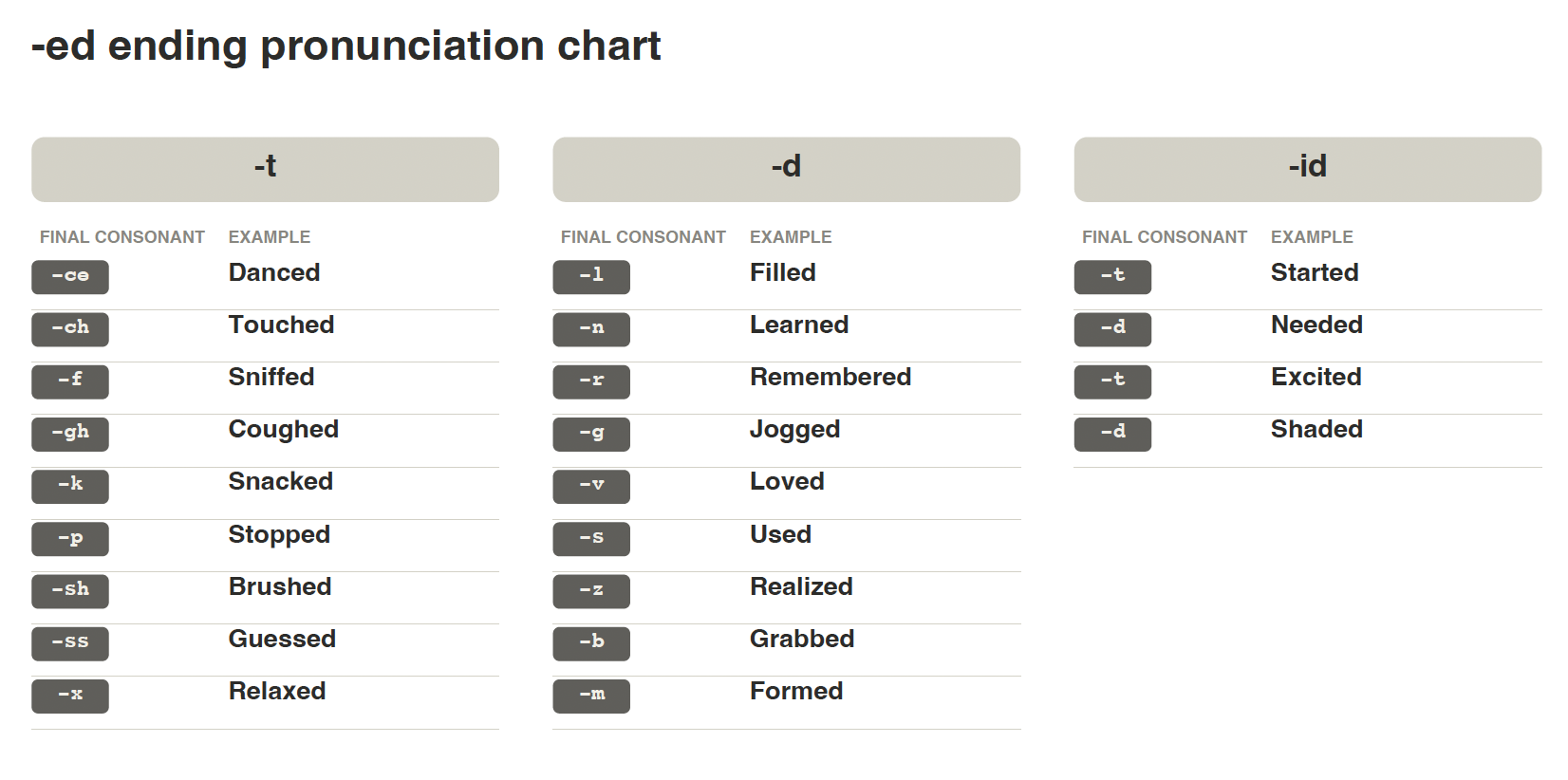
There are a few things you must remember before everything comes together.
1) If the base verb ends in a -T or a -D sound (start, need, skate, shade), we hear the vowel in the –ED ending pronounced as -ID. We only hear this vowel sound before the final -D after these 2 letters (-T and -D).
2) If the base verb ends in any other sound (NOT -T or -D), the -E in the -ED ending is silent.
Last, I believe whether the sound officially ends in -T or -D, as you see above in the left 2 columns, this will naturally happen when you learn to make the -E silent.